
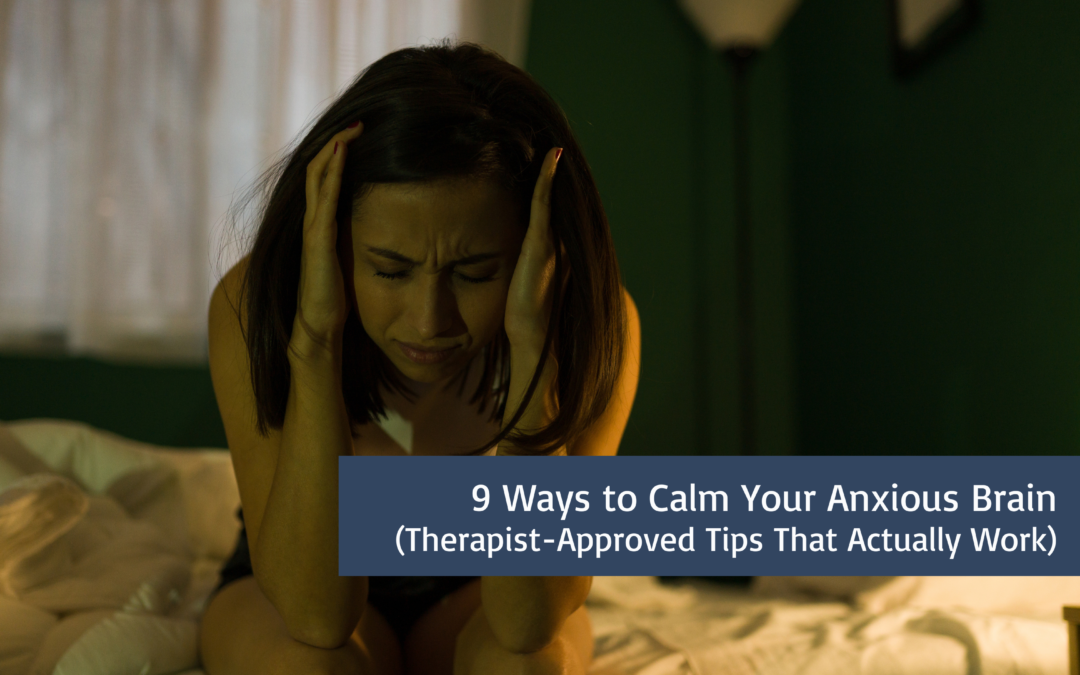
Anxiety can feel all-consuming. It can sit with you at the breakfast table, follow you into meetings, and keep you awake long after everyone else has gone to sleep. If that sounds familiar, you are not alone in this.
In fact, research suggests that people wait an average of 15 years before seeking help for anxiety. Fifteen years of managing it quietly, pushing through, or wondering if something is wrong with them. That is a long time to carry something so heavy without support.
If you are reading this, maybe you are somewhere in that window. Maybe you have only just started noticing it. Either way, this is a good place to start.
First, let’s talk about what anxiety actually is
Here is something worth knowing before anything else. Anxiety is not a flaw. It is not a sign that something is broken in you. It is completely normal, and we actually need it to function.
As Marie Vakakis, accredited mental health social worker and host of This Complex Life podcast, puts it: “We need some of this in our lives to motivate us or to think through possible scenarios.”
Anxiety is your brain’s built-in alarm system. It is designed to keep you safe, alert and prepared. The flutter before something important, so you don’t forget it. The instinct that something feels off, so you check again. That is anxiety doing its job, keeping you safe.
The difficulty comes when that alarm system gets stuck. When it fires so frequently or so loudly that it starts getting in the way of the life you want to live.
Anxiety has three core components
It does not just live in your head. It shows up across three connected areas. In your thoughts, feeling and behaviours.
Thoughts are the what-ifs, the worst-case scenarios, the mental loops that are hard to break. Feelings are the physical sensations your body experiences in response. Behaviours are the things you do, or avoid doing, because of how anxious you feel.
Some of what you might notice if you’re anxious
Restlessness or feeling on edge. Being easily fatigued. Difficulty concentrating or your mind going blank. Irritability. Muscle tension. Trouble falling asleep, staying asleep, or waking up feeling like you never really rested.
It makes sense that these experiences feel exhausting. They are, and they are also very common.
So what can you do if you’re anxious?
Some people will find that a few small, consistent strategies make a real difference. Others will need a bit more support alongside those strategies, and that is okay, too. Both are valid. Below are nine approaches drawn from evidence-based therapies used by mental health professionals every day.
Start with one or two that feel manageable. See what shifts and how it helps you.
1. Deep breathing and grounding
When to use it: During moments of acute anxiety, panic, or when you feel overwhelmed and pulled away from the present.
How to use it: Try the 4-7-8 technique. Inhale for 4 counts, hold for 7, exhale slowly for 8. For grounding, try the 5-4-3-2-1 method. Name 5 things you can see, 4 you can touch, 3 you can hear, 2 you can smell, and 1 you can taste.
Why it works: Deep breathing tells your nervous system it is safe to settle. Grounding pulls your attention back to the present moment, which is usually where the actual threat is not.
2. Thoughts are not facts
When to use it: When you catch yourself spiralling into worst-case thinking or taking every anxious thought at face value.
How to use it: When an anxious thought shows up, pause and ask yourself honestly: is this a fact, or is this a fear? Try writing the thought down, then writing a more balanced version alongside it.
Why it works: This sits at the heart of Cognitive Behavioural Therapy (CBT). Our thoughts shape how we feel and how we act, but thoughts are not reality. As Marie says, one of the biggest myths around anxiety is that “some people think if I feel it, then I have got an anxiety disorder or something really bad is happening instead of knowing that is a normal, healthy part.” Learning to notice and gently challenge unhelpful thoughts is one of the most well-researched anxiety tools available.
3. Progressive muscle relaxation
When to use it: When you are carrying physical tension in your body or struggling to wind down before sleep.
How to use it: Starting from your feet and working upward, tense each muscle group firmly for 5 seconds then release completely. Notice the contrast between tension and relaxation as you move through your body.
Why it works: Anxiety stores itself in the body. Progressive muscle relaxation targets that physical tension directly, helping your nervous system find its way back to calm.
4. Mindfulness and staying present
When to use it: When your mind is running ahead to future worries or replaying past events.
How to use it: A simple 5-minute practice of sitting quietly, focusing on your breath, and gently returning your attention when it wanders is enough to make a difference. Apps like Headspace, Calm or Insight Timer are good starting points.
Why it works: Mindfulness builds your ability to notice anxious thoughts without being swept away by them. Research consistently shows it reduces anxiety and improves emotional regulation over time.
5. Physical movement
When to use it: When you are feeling restless or like anxious energy is building with nowhere to go.
How to use it: It does not have to be a gym session. A brisk walk, a yoga class, dancing around your kitchen. Anything that gets your body moving counts. Consistency matters more than intensity.
Why it works: Exercise burns off excess stress hormones like cortisol and adrenaline, releases mood-boosting endorphins and gives your mind a genuine break from the worry cycle. You can do it daily as a preventative strategy.
6. Look at your caffeine and sleep
When to use it: If anxiety feels worse in the mornings, after coffee, or when you are running on poor sleep.
How to use it: Try reducing caffeine, especially in the afternoon, and build a consistent bedtime routine. Dimming lights, putting your phone down an hour before bed and keeping your sleep and wake times regular, even on weekends, can make a real difference. Yep, it sounds boring, but it works.
Why it works: Caffeine can mimic and amplify anxiety symptoms. Poor sleep makes the brain’s threat-detection centre significantly more reactive, turning up the volume on everything that feels stressful or scary.
7. Scheduled worry time
When to use it: When anxious thoughts keep interrupting your day no matter what you do.
How to use it: Choose a specific 15-minute window each day as your designated worry time. When anxious thoughts come up outside that window, write them down and remind yourself you will give them proper attention later. When worry time arrives, sit with those thoughts intentionally, then close the notebook.
Why it works: Trying to suppress anxious thoughts often makes them stronger. Giving worry a container reduces its power and stops it from spilling into everything else. As Marie reflects from the podcast: “I still do that with kids. We have worry jars and we spend all this time and decorate a jar and they have colored notes and they stick them in and then at the end of the day with their parents, they go through them and sort them out.”
8. Reach out and connect
When to use it: When anxiety is making you want to withdraw or cancel plans, which is often exactly when connection matters most.
How to use it: Reach out to someone you trust, even just for a short chat or a walk. You do not have to explain everything. Sometimes just being around people you feel safe with is enough.
Why it works: Social connection triggers the release of oxytocin, which has a genuinely calming effect on the nervous system. Isolation tends to give anxious thoughts more room to grow.
9. Reach out for professional support
When to use it: When anxiety is significantly affecting your daily life, relationships or work, or when self-help strategies alone do not feel like enough.
How to use it: Consider reaching out to your GP, a psychologist or a registered counsellor. Evidence-based therapies like Cognitive Behavioural Therapy and Acceptance and Commitment Therapy have strong research support for anxiety. You do not have to be in crisis to ask for help.
Why it works: A trained professional can help you understand the specific patterns driving your anxiety and give you tools tailored to you. As Marie’s guest Dr Lillian Najad said on the podcast, making that first call is “probably the bravest thing that you can do and probably one of the most effective strategies for dealing with anxiety.”
You do not have to hold it all together
Anxiety is one of the most common experiences people bring into the therapy room. It is also one of the most treatable. You are not unsafe. You are uncomfortable. And that is something that can change.
Start small. Pick one strategy. Try it for a week and notice what shifts.
If you would like some support figuring out what works for you, that is exactly what we are here for.
Resources and Links
- Counselling Services
- Perinatal Depression
- Why Resolutions Fail
- Contact
This Complex Life Podcast, “Do You Worry?” episode with Marie Vakakis and Dr Lillian Najad. This conversation goes deeper into the difference between worry and anxiety, why worry can actually be useful, and how to know when it might be time to reach out for support. Listen wherever you get your podcasts.
Contain Your Brain App developed by Dr Lillian Najad, available on iOS and Android. A practical tool based on the worry time technique. Find out more at containyourbrain.com.









Recent Comments