
By Michelle, AMHSW and Perinatal Therapist
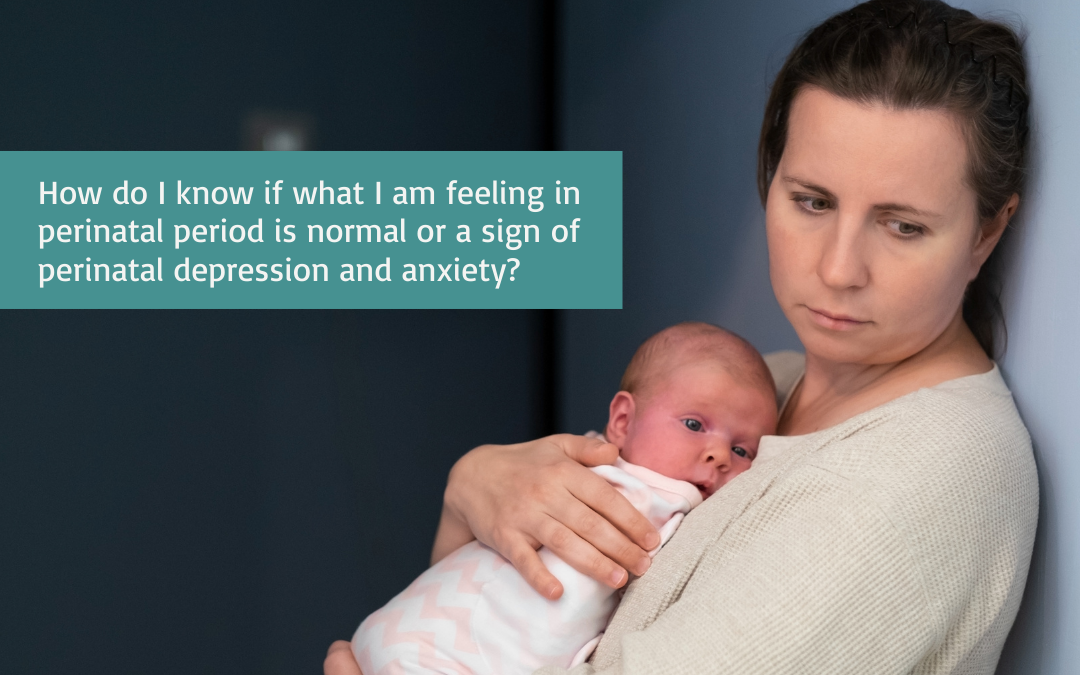
How do I know if what I am feeling in the perinatal period is normal, or a sign of perinatal depression and anxiety?
The perinatal period covers a lot of ground. It starts before conception, moves through pregnancy, and stretches all the way through your baby’s first year. That is a long stretch of time, and a lot happens inside your body, your brain, and your relationships during it.
Feeling off during this time is really common. Hormones shift rapidly. Sleep disappears. Your identity, your relationships, and your sense of self are all in motion at once. It makes sense that you might feel wobbly.
But there is a difference between the normal wobble and something that needs more support. Here is how to tell them apart.
Baby blues are normal and very common
It is estimated that 50 to 80 percent of postpartum women and pregnant people experience what is known as the baby blues. That is a lot of people. There is nothing wrong with you for feeling this way.
Baby blues can look like:
- Mild sadness or tearfulness
- Mild anxiety
- Irritability that seems to come from nowhere
- Fatigue
- Disrupted sleep
- Feeling more sensitive than usual
The important thing to know is that baby blues symptoms typically pass within 14 days and usually ease without any formal intervention. Your body and mind are adjusting to an enormous change. Give yourself some grace.
When it might be something more
If the symptoms last longer than two weeks, or feel significantly more intense than what is described above, it could be a sign of perinatal depression or anxiety. These conditions are common too, and they are treatable. You do not have to push through on your own.
Perinatal depression and anxiety show up differently for different people. Most people do not experience every symptom on this list, but if several of these feel familiar, it is worth paying attention.
You might notice:
- Deep sadness or a sense of hopelessness
- Pulling away from people you are usually close to
- Mixed or complicated feelings about your baby
- Big swings between highs and lows, or a persistent feeling of being overwhelmed
- Difficulty concentrating
- Losing interest in things you used to enjoy
- Trouble falling or staying asleep, even when your baby is sleeping
- Fear of driving, with or without your baby in the car
- Fear of caring for your baby because you don’t feel like you can trust yourself
- Finding it hard to let anyone else care for your baby, even your partner
- Excessive worry about your baby that feels impossible to switch off
- Thoughts of harming yourself or your baby
- Guilt or a strong sense of not being good enough as a parent
- Difficulty accepting or settling into motherhood
- Thoughts that feel out of character or irrational, or experiences of seeing or hearing things that are not there
When to reach out
If more than three of these symptoms feel true for you, and they are getting in the way of your daily life or your ability to care for your baby, please talk to someone. Your GP, obstetrician, or maternal and child health nurse can connect you with the right support. You do not have to figure out whether this is serious enough on your own.
You are not unsafe. You are uncomfortable. And that discomfort is asking for attention, not judgement.
Reaching out is not a sign that you are failing. It is the most grounded, practical thing you can do for yourself and your baby.
You are not alone in this.
Written by Michelle, Accredited Mental Health Social Worker and Perinatal Therapist at The Therapy Hub.









Recent Comments