
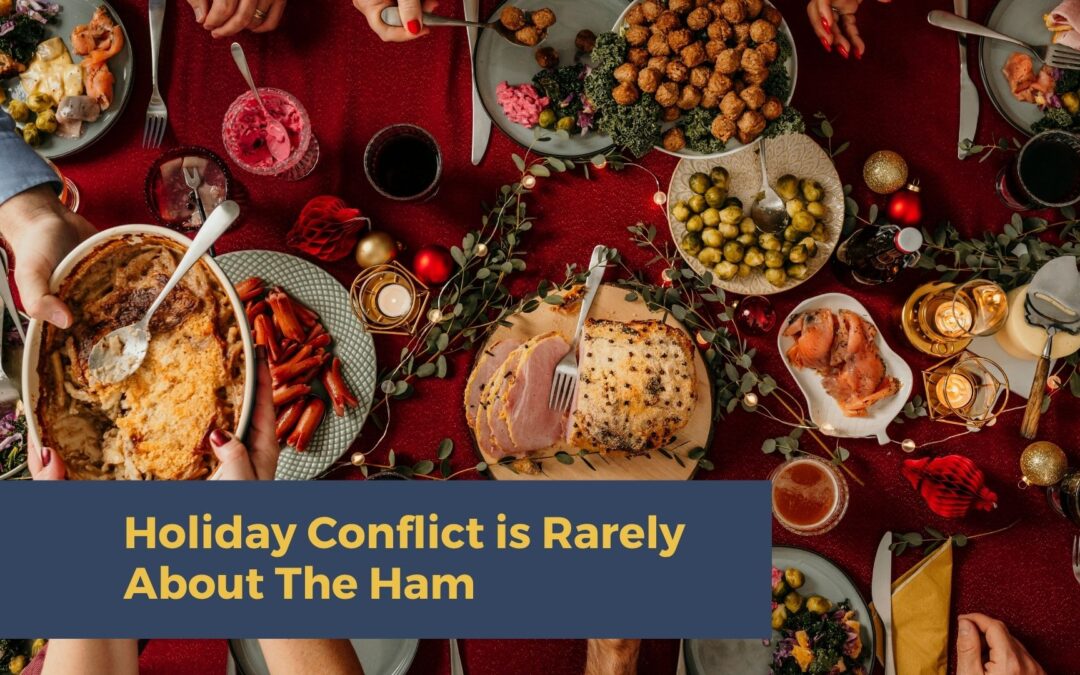
A couple stands in the kitchen on a warm December night. One person is stressing about the napkins and table setting for Christmas lunch. The other is wondering why this is such a big deal. A small comment ‘’don’t worry about that, no one cares’’ turns into an argument neither of them saw coming. They do not know why they are suddenly fighting, but both feel hurt and misunderstood.
This comes up often at The Therapy Hub, and it was something I spoke about with Jodi Richardson on Well Hello Anxiety Podcast. People always ask the same questions. Why are we fighting about something so small? Why does my partner care so much about the napkins? Why can’t they see how stressed I am? Why doesn’t anyone seem to care when all I want is a nice day?
The truth is that none of these fights are really about napkins or ham. They are about meaning, memories and the picture people carry in their mind of how the day should feel.
Why do we fight more during the holidays?
By the end of the year, most people are tired. Work deadlines pile up. School events take over. Family expectations build. There is pressure to see everyone before the holidays. When you add the emotional weight of childhood memories and unspoken hopes, it is no surprise that the smallest detail can set off a reaction.
If someone grew up with a warm and busy Christmas, they may try to recreate that feeling. If someone grew up without much celebration, they may try hard to build something new. This is why one partner is motivated by matching pyjamas, favourite drinks and a beautifully set table, while the other feels overwhelmed and confused by all the fuss.
It means something to each of them. They both likely want connection. They just express it differently.
Why does my partner care so much about the small things?
When someone becomes fixated on napkins or ham or decorations, it usually means those details represent something deeper. A sense of belonging. A memory of childhood. A wish to create something meaningful for the family. A longing to have a beautifully set table for a special occasion.
If their partner dismisses it with nobody cares about napkins, it feels like their effort and emotion are being dismissed too. The surface issue, the napkin, is tiny. The feeling or disappointment and hurt underneath is big.
Why can’t my partner see how stressed I am
On the other side, the person who is overwhelmed is often asking a different question. Why can’t you see I am doing my best? Why does it feel like nothing is enough? Why are we fighting when we are trying so hard.
They want connection too, but they express it through simplicity, rest and presence. For them, letting go of the small details feels healthier. For their partner, those details are part of the meaning.
This is where the clash happens.
How can we stop fighting?
Instead of reacting to the surface issue, ask gentle questions. What does this occasion mean to you? How did you celebrate it growing up? What were you hoping this would feel like. What is the part you care about most? These questions help reveal the story behind the stress.
Validation is just as important. You do not need to agree with the detail to acknowledge the feeling. Saying ‘’I can see this matters to you’’ softens both people quickly.
It also helps to be honest about your own needs. I am overwhelmed. I want this to feel good, but I am struggling to keep up. When both people understand the emotional layer, the argument loses its power.
The most meaningful holidays are not created by perfect tables or perfect plans. They are created by connection. Pausing long enough to ask what is the dream behind this can turn a tense moment into an opportunity for closeness.
If holiday stress is creating tension in your home, our team at The Therapy Hub can support you with individual, couples or family therapy. Reach out to book an appointment or learn more about how we can help.









Recent Comments