You are lying in bed next to your partner after another tense conversation that went nowhere. You are both quiet, not because you do not care, but because you are exhausted from trying so hard and still missing each other. You wonder if things are supposed to feel this hard. Would talking to someone help?
That moment, the one where you think there has to be a better way to reach each other, is often what brings people to couples therapy. It is not about being broken or failing. It is about caring enough to try something different.
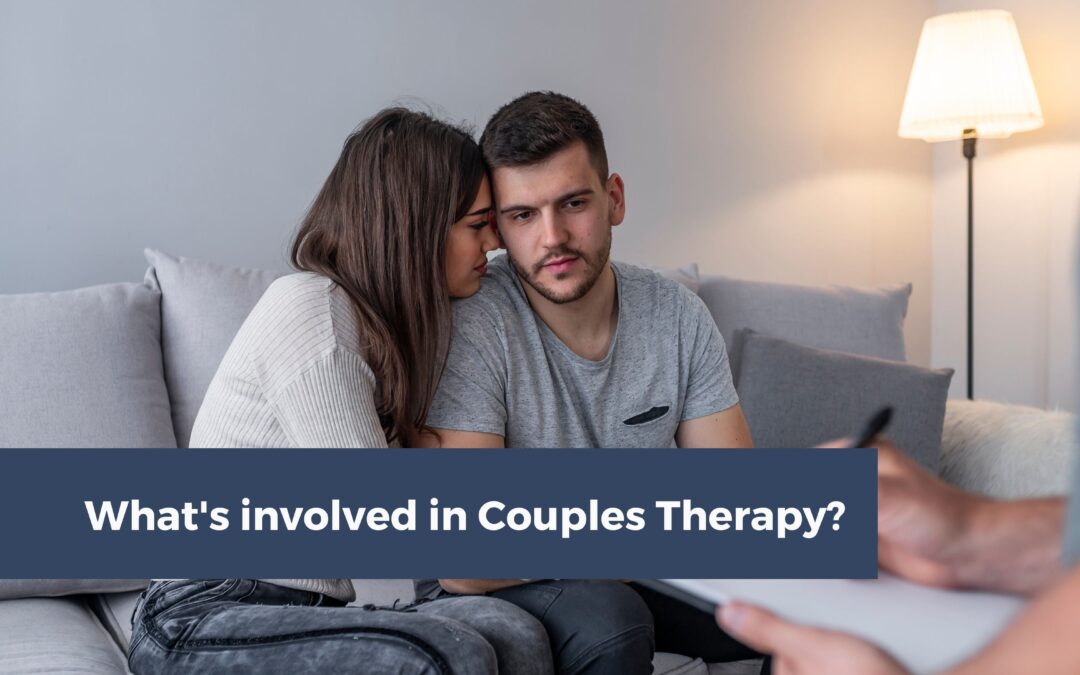
What is involved in couples therapy?
If you are reading this, you might already be feeling unsure, hopeful, overwhelmed, or all three at once. You might be wondering how many sessions it takes, what you are meant to say, or whether your concerns are even valid. This guide walks you through the things most couples want to know. Clear, honest information to help you feel steadier and more prepared as you take this next step together.
How many sessions of couples therapy will we need?
The short answer? It depends. Couples therapy isn’t a one-size-fits-all approach. Some couples benefit from six sessions. Others might stay for several months. It’s not about racing to a finish line it’s about working through what’s needed at your pace.
There’s also the option of marathon sessions, a more intensive version of couples therapy that happens over 2 to 4 days. This is ideal for couples who want to make faster progress, are managing a crisis like infidelity, or simply struggle to commit to weekly appointments.
Instead of stretching therapy out over six months, you might do that same work in a weekend. It’s not necessarily easier, it’s just condensed. And for some couples, it helps get to the root of the issue more quickly.
There’s no gold standard for how many sessions it takes. What matters is finding the right format and pace for you and trusting that change isn’t about speed, but intention.
What are the disadvantages of couples therapy?
Therapy is often described as a safe space, but that doesn’t mean it always feels safe. The process can be uncomfortable, especially when it brings up unresolved conflict, long-standing resentment or deeply held fears. There’s a risk it gets worse before it gets better.
If both people aren’t fully engaged, sessions can stall. Sometimes, therapy can highlight that one partner has already emotionally checked out and that’s painful to sit with.
Not every therapist is the right fit either. If you’ve had a negative experience in the past, it can take time to find someone who works for both of you. That’s normal, and it’s okay to keep looking.
Therapy is not a fix-all. But it is a place for honest conversation. A place to explore if and how you can move forward together.
Listen to the full episode here:
https://marievakakis.com.au/how-couples-therapy-works-and-when-to-start/
What not to say in couples counselling?
There’s no strict rulebook for therapy. But there are things that can shut down a conversation fast. Statements like You always… or You never… tend to put your partner on the defensive. They make it harder to find understanding and easier to get stuck in blame.
In therapy, the most helpful language comes from the ‘I’ perspective. I feel hurt when… or I need… opens the door to dialogue. You’re not bottling things up. You’re just shifting how you say them.
It’s also important to leave sarcasm and point-scoring outside the room. Therapy isn’t about winning. It’s about making space for both experiences to be heard even if they clash.
It’s okay if you get it wrong. That’s part of the process. What matters is how you come back to the conversation, and whether you’re open to learning a different way to connect.
There’s no gold standard for how many sessions it takes. What matters is finding the right format and pace for you and trusting that change isn’t about speed, but intention.
Why do people avoid couples therapy?
Some fear being blamed. Some think therapy means the relationship is failing. Others grew up in homes where you never talked about problems outside the family. Many worry that change will be uncomfortable. And it is. But not changing is uncomfortable too. Silence has a cost.
Others believe therapy is only for relationships in crisis, when in reality, it can strengthen communication and connection at any stage. Cultural or generational beliefs, like keeping relationship problems private, can also prevent couples from seeking support. Lastly, change can feel daunting, but avoiding therapy doesn’t make issues disappear, starting sooner can lead to healthier, more fulfilling relationships.
Would you recommend a couple start therapy if one partner already wants out but is being convinced by the other to try this first?
Yes, therapy can still be helpful in this situation. If one person is set on leaving while the other wants to repair things, therapy provides a space to communicate openly about what led to this point, what each person needs, and whether a respectful, amicable separation is the best option.
Sometimes, therapy helps clarify that there’s still something worth working on. Other times, it allows both partners to gain closure and part ways with less conflict. If one partner is unwilling to engage in couples therapy, individual therapy can still be valuable, whether it’s for improving communication, setting boundaries, or gaining clarity on what they need moving forward.
Regardless of the outcome, therapy offers a safe space to explore options with professional guidance, helping both partners make informed and thoughtful decisions rather than acting from a place of fear or frustration.








Recent Comments