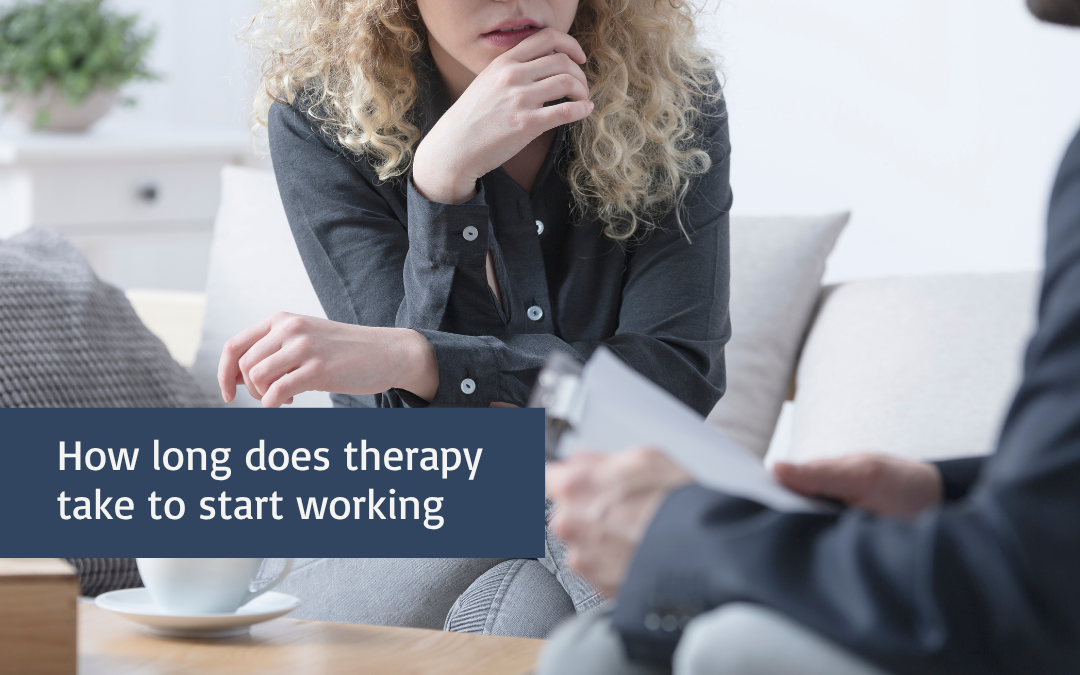
One of the most common questions people ask before starting therapy is how long it will take.
It is a fair question. People want to know what they are committing to and what to expect. The honest answer is that it depends, and it is worth understanding what it depends on.
When will I start to notice a difference?
Most people notice small shifts within the first two to three sessions. This does not always mean the hard stuff is resolved. It often means you have a clearer picture of what is going on, you feel less alone with it, or you have one or two tools that are already making a difference day to day.
Meaningful, lasting change tends to take a little longer.
How long therapy takes depends on a few things
What you are working on.
Some concerns respond well to short-term focused work. Others are more complex and take more time.
How long it has been going on.
Something that has been part of your life for many years will generally take longer to shift than something more recent. Things like attachment wounds, childhood trauma, abuse and neglect can require long-term support.
How consistently you attend.
Regular sessions, particularly at the beginning, make a real difference to momentum and progress.
Whether you practise between sessions.
Therapy is not just what happens in the room. The small things you try in between matter. Practising coping strategies, taking any prescribed medication and making lifestyle changes recommended like movement, sleep and reducing alcohol.
A rough guide to session numbers
Short-term therapy, around 6 to 10 sessions, works well for people dealing with a specific issue, a life transition, or something relatively recent. Many people find this is enough to make sustainable change.
Medium-term therapy, around 15 to 20 sessions, suits people working through patterns that have been around for longer, relationship difficulties, anxiety that has built up over time, or grief.
Longer-term therapy is sometimes needed for more complex presentations. OCD and eating disorders, for example, can require more intensive support, sometimes around 40 sessions across a year. Trauma work and personality-related concerns can also take longer.
There is no right or wrong answer here. Your therapist will talk with you about what makes sense for your situation and review how things are going as you go.
How sessions are usually structured over time
Most people start with weekly or fortnightly sessions. As things progress and you build skills and confidence, sessions often taper out to monthly or as needed.
The goal is always to work yourself out of needing us as much. That is what good therapy looks like.
A note on fit
The single biggest predictor of whether therapy works is the relationship between you and your therapist. If something does not feel right after a few sessions, it is okay to say so. You can ask to try a different clinician. We will not be offended. We want you to find the right fit.
If you have questions about getting started or are not sure what kind of support you need, reach out. We are always happy to talk it through.








Recent Comments