
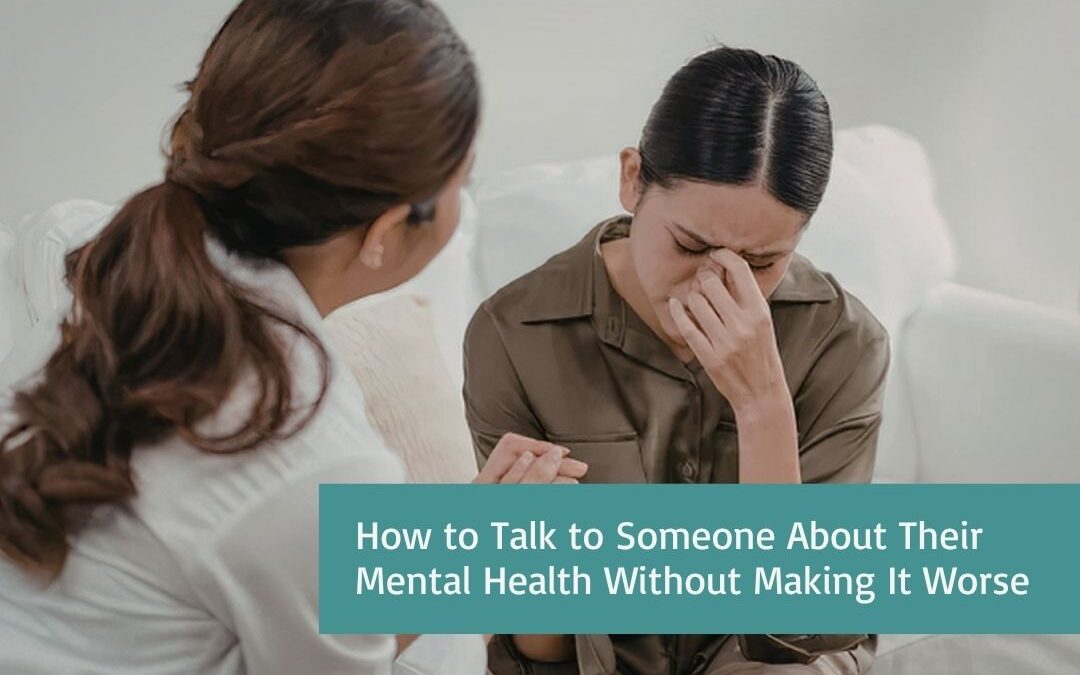
Concerned about a friend or family member but worried that you’ll say the wrong thing? Not sure how to help someone with anxiety or depression?
You’re not alone. Many people hold back from checking in on someone’s mental health because they’re scared of making things worse. However, with the right approach, you can have a supportive and meaningful conversation that really helps.
Whether it’s a friend, colleague, or family member, these tips can help you feel more confident reaching out when something doesn’t feel quite right.
Pick the right moment. Choose a quiet space where you won’t be interrupted. Make sure you both have time to talk. If you’re worried about someone’s alcohol use, avoid settings like bars or parties.
Start gently. If you think the conversation might be difficult, ask if they’ve got the headspace for a chat.
Don’t be sarcastic, rude, or try to make a joke about it.
You might start with: I’ve noticed you haven’t seemed yourself lately. Do you want to talk about it?
Stick to open-ended questions that invite sharing, like: How have things been going for you lately?
If you’re worried about suicide, ask directly. It shows you care, and asking doesn’t put the idea in someone’s head. You can learn more here.
Simply listen and don’t try to fix it. You don’t need to have all the answers. You just need to listen. Put distractions aside. Make eye contact. Let them speak at their own pace.
Say things like: That sounds really tough. I’m really glad you told me. You don’t have to go through this alone
Be careful with your words
Say:
I’m here for you. Thanks for trusting me with this. Let’s take this one step at a time
Avoid:
It’s not that bad. Just think positive. Other people have it worse. You’ll be fine. You should just.
Even well-meaning advice can feel dismissive if someone is in pain. When in doubt, listen more than you speak.
Ask how you can support them. Try: What would be helpful for you right now?
Offer practical help and gently suggest support options if needed. You could mention booking in with a GP, talking to a therapist, or calling a helpline. You might even offer to sit with them while they make the call or attend the first appointment.
Listening is powerful. One of the things we teach in Mental Health First Aid (MHFA) is that being heard can be just as important as being helped. Listening builds trust. It helps someone feel seen and understood. It tells them they matter.
MHFA training is for everyone. Mental health first aid is not just for crisis professionals. It’s for parents, teachers, colleagues, friends, neighbours. It gives you simple, practical tools to support the people around you.
At The Therapy Hub, we run MHFA training to help organisations build skills and confidence around mental health conversations. You’ll learn how to spot warning signs, respond with empathy, and connect people to professional help when needed.
If you’re interested in learning more, head to www.marievakakis.com.au
Because we all have mental health
When we know how to talk about it, we’re better equipped to support our families, our workplaces, and our community.
Need urgent support? Call 000 for emergencies. Lifeline: 13 11 14. Kids Helpline: 1800 55 1800. Suicide Call Back Service: 1300 659 467









Recent Comments